
As the weather warms and the seasons shift, pet owners across Australia are facing a growing threat: an alarming increase in tick prevalence. These tiny but dangerous parasites are not only more widespread than ever before, but their activity periods are lengthening — posing serious health risks to pets year-round. Understanding why this is happening and how to protect your furry friends is vital to keeping them safe and healthy.
The Rise in Tick Populations
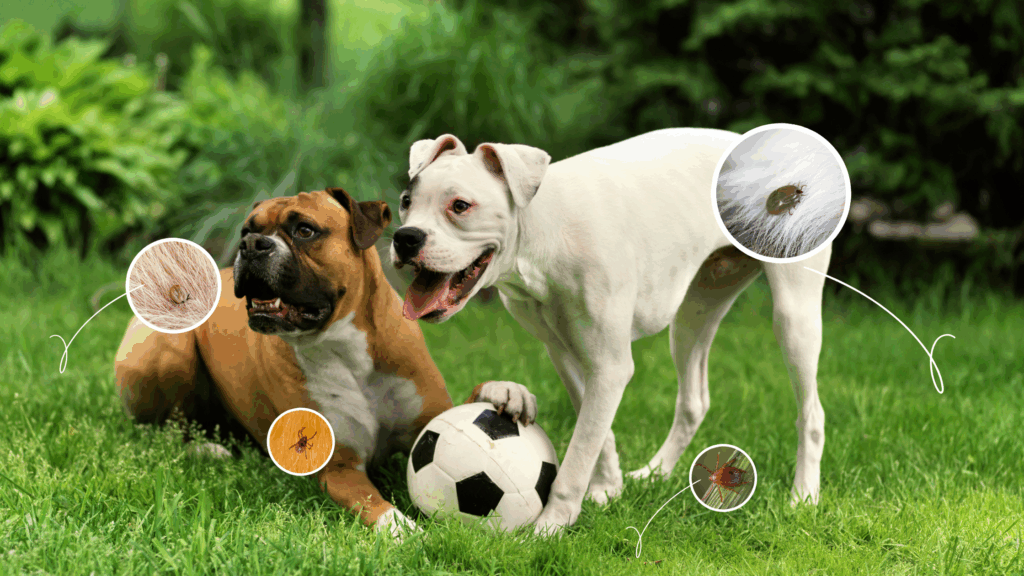
Ticks thrive in warm, humid environments. With milder winters and longer summers becoming the norm, these conditions allow ticks to remain active for more months of the year. Climate change, increased wildlife movement, and expanding suburban areas near bushland all contribute to the spread of tick populations into regions where they were once rare.
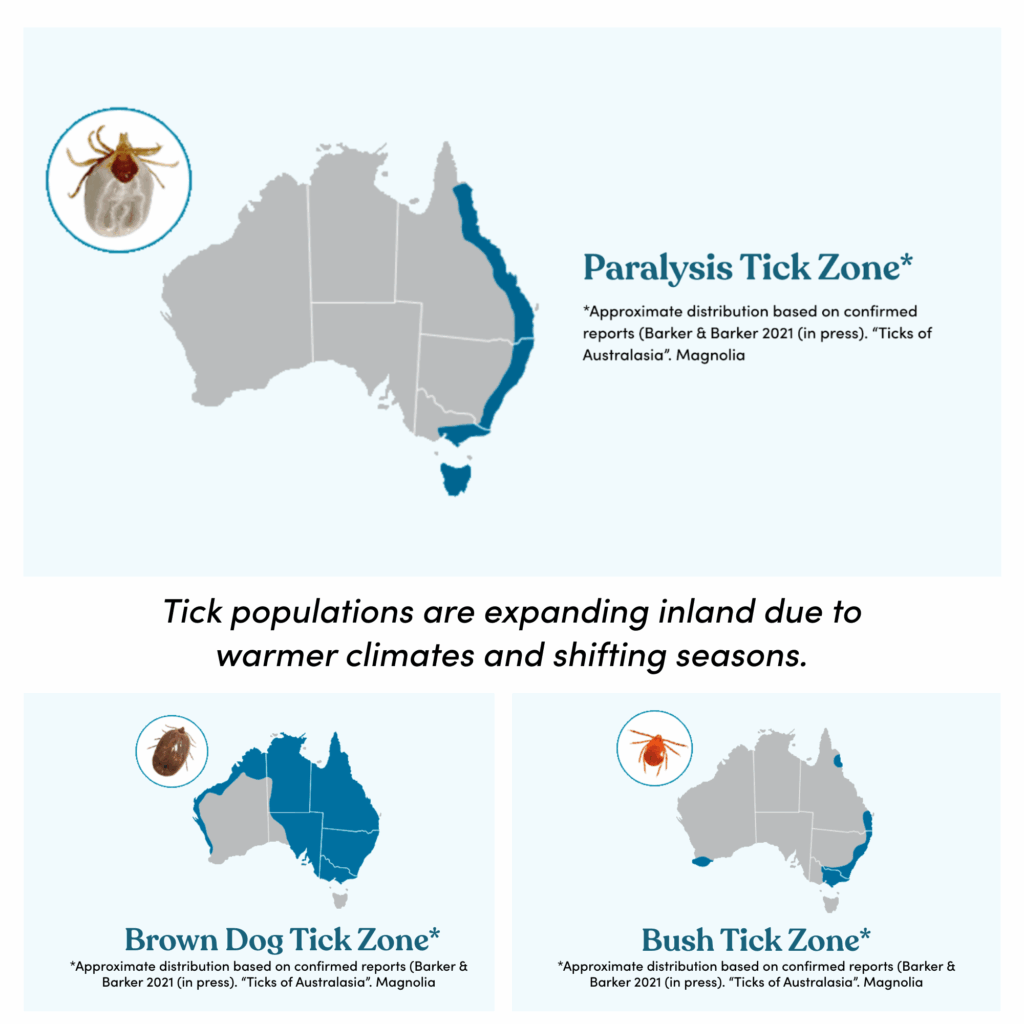
In particular, the paralysis tick — one of Australia’s most dangerous tick species — has been reported in new areas along the eastern seaboard, reaching further inland than ever before. Even urban backyards are no longer safe havens, with ticks hitching rides on birds and other wildlife.
The Main Tick Species Affecting Pets in Australia
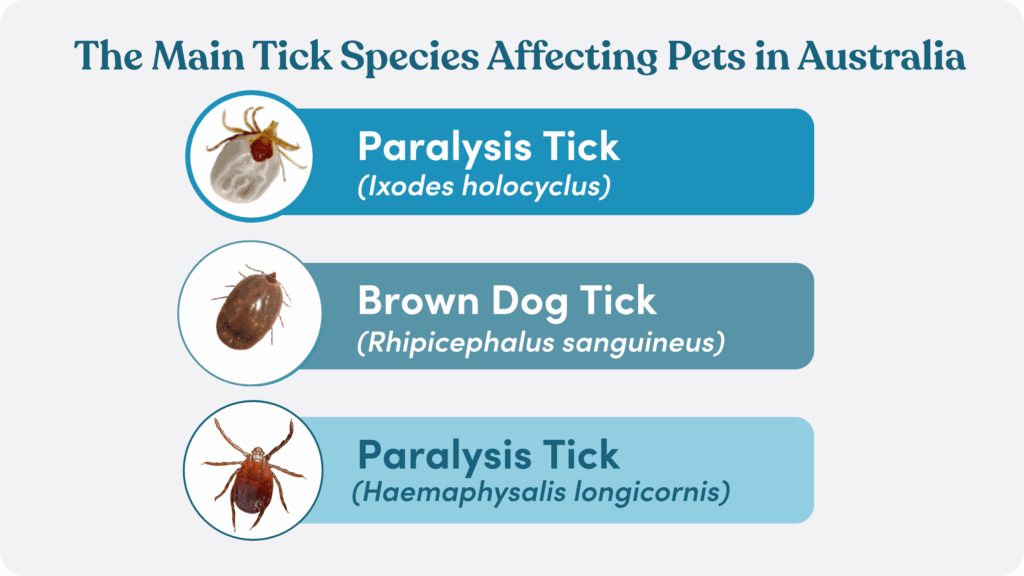
There are several tick species of concern for Australian pet owners, each with its own risks and regional prevalence:
🕷️ 1. Paralysis Tick (Ixodes holocyclus)
- Found mainly along Australia’s east coast — from far north Queensland to eastern Victoria.
- The most dangerous species, capable of causing tick paralysis through a neurotoxin released while feeding.
- Symptoms in pets include weakness, wobbliness, difficulty breathing, vomiting, and even collapse if untreated.
🕷️ 2. Brown Dog Tick (Rhipicephalus sanguineus)
- Common across Australia, particularly in warmer inland and northern regions.
- Can transmit Babesia and Ehrlichia canis, diseases that cause anaemia, fever, and lethargy.
- These ticks can infest homes and kennels, making eradication challenging.
🕷️ 3. Bush Tick (Haemaphysalis longicornis)
- Found mainly along the east coast and parts of Tasmania.
- Known to infest dogs, cats, livestock, and even humans.
- While less toxic than paralysis ticks, they can transmit other pathogens and cause irritation or secondary infection.
The Hidden Dangers of Ticks
Ticks are more than just an itchy nuisance — they are a serious health hazard. They can cause:
- Tick paralysis: Caused by paralysis ticks, leading to respiratory distress and potentially death if untreated.
- Blood-borne diseases: Ticks can transmit Babesiosis and Ehrlichiosis, both of which can cause fever, anaemia, and organ failure.
- Allergic reactions and skin irritation: Even non-paralysis ticks can cause local swelling and infections.
Because signs of tick-borne illness can appear suddenly and worsen rapidly, prevention is always better than cure.
Why Year-Round Parasite Control Is Essential
Gone are the days when tick prevention was a seasonal concern. With tick activity persisting throughout much of the year, consistent, year-round protection is essential. Modern tick preventatives come in many forms making it easy to find an option that suits your pet’s lifestyle.
A few key tips:
- Use regular tick prevention: Ensure your dog or cat’s parasite control is up to date, and set reminders for reapplication or dosing.
- Check your pet regularly: Especially after walks, bush visits, or playtime in long grass. Focus on hidden areas such as around the ears, under the collar, between toes, and under the tail.
- Keep your environment tick-safe: Trim grass, clear leaf litter, and limit access to tick-prone areas.
Specific Benefits of Leading Products
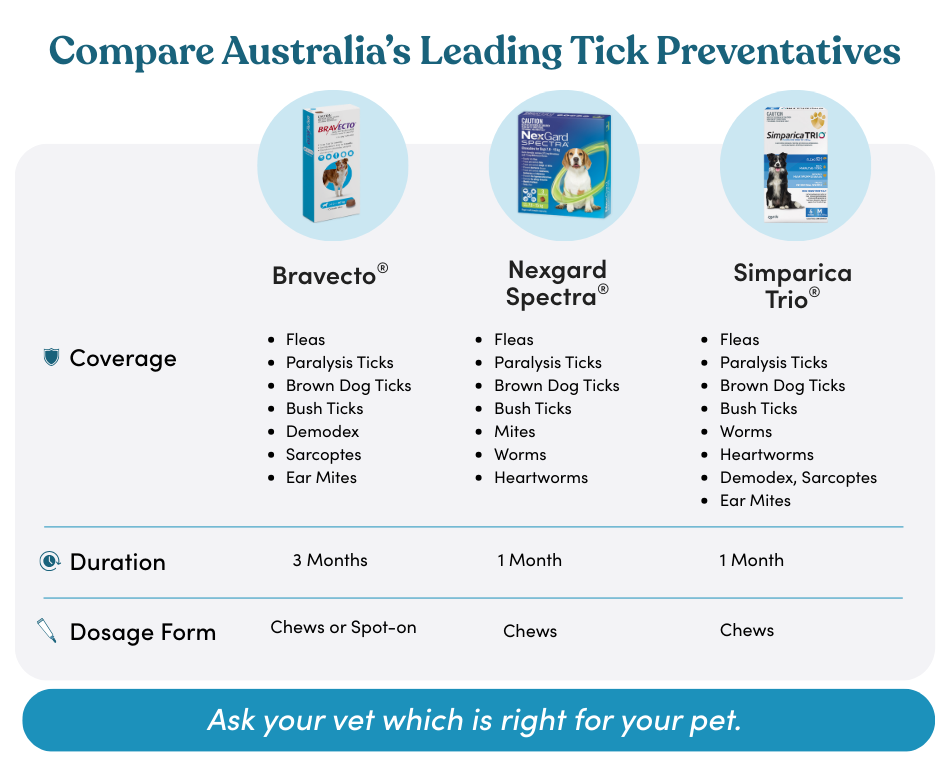
Bravecto
- Offers extended-duration protection against paralysis ticks:
- Topical (spot-on) treatment can cover against fleas and paralysis ticks for up to 6 months.
- Chew can cover for up to 4 months
- Coverage for brown dog ticks for up to 8-12 weeks (depending if chew or spot-on used).
- Efficacy of the chews is not affected by bathing or swimming.
- Reduced treatment frequency compared to monthly products — useful for busy owners or for pets less tolerant of frequent dosing
Nexgard Spectra
- Convenient beef-flavoured chew provides protection against paralysis, brown dog and bush ticks for a month.
- Efficacy of chew is not affected by bathing or swimming
- Also provides coverage against hookworms, whipworm, roundworm and heartworm.
Simparica Trio
- Palatable liver-flavoured chew that provides protection against paralysis, brown dog and bush ticks for a month.
- Also provides coverage against hookworm, roundworm and heartworm.
- Efficacy of chew is not affected by bathing or swimming
Partnering with your Vet
With tick numbers on the rise, vigilant parasite control is one of the most important parts of responsible pet care. Protecting your pets not only safeguards their wellbeing but also provides peace of mind knowing you’re one step ahead of this growing threat.
Not all ticks live in every area and it is best to consult your local vet clinic to tailor a tick prevention plan. They can recommend the most effective products for your region and pet’s needs such as:
- Your geographic region and tick/parasite risks
- Your pet’s health, lifestyle (indoors/outdoors), age, breed and any medical history
- Which product is most suitable (monthly vs extended, oral vs topical, internal worms coverage)
- How to monitor for signs of infestation, side effects, and ensure compliance

With tick numbers increasing across Australia, vigilant parasite control is one of the most important parts of responsible pet ownership. Using proven preventatives like NexGard Spectra, Simparica Trio, or Bravecto, combined with regular checks and a tick-safe environment, will help keep your pets happy, healthy, and safe — all year long.