
Australia’s climate means parasites never truly go away — here’s what you need to know, and which products can help.
If you live in Australia, there is no true ‘off season’ for parasites. Fleas, ticks and intestinal worms pose a genuine health risk to pets, and their owners — every single month of the year.
Ask any Australian vet and they’ll tell you the same thing: the idea that you can pause parasite prevention over winter, or only treat when you see a problem, is one of the most common — and costly — mistakes pet owners make. Australia’s warm, humid climate allows parasites to survive and reproduce year-round, and the consequences of an untreated infestation can range from skin irritation to life-threatening disease.
This blog explains why continuous prevention is so important, walks you through the different parasite threats facing Australian pets, and helps you compare the leading products available for your dog or cat.
Australia’s Parasite Problem: Why It’s Worse Here Than Almost Anywhere
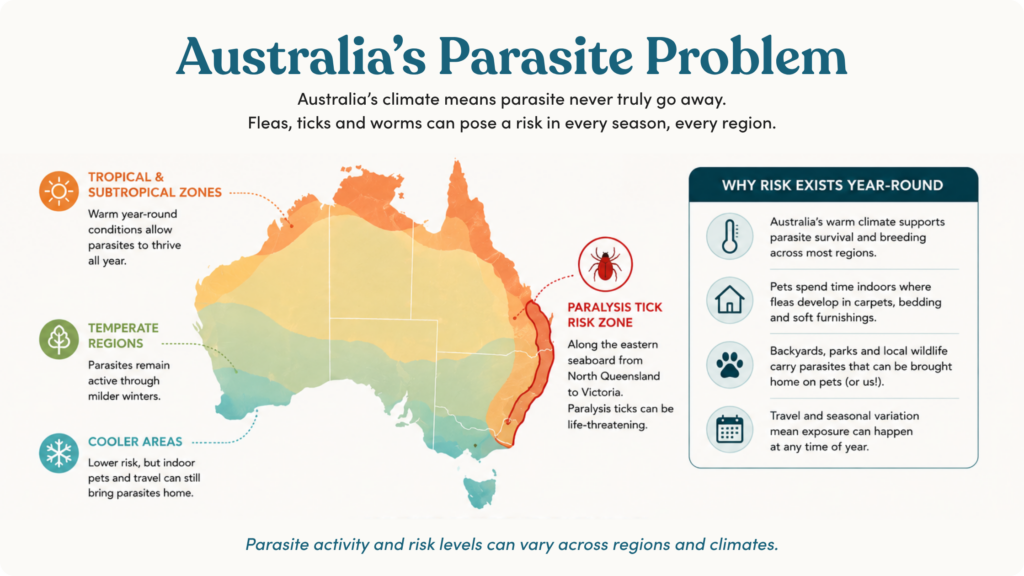
Australia is home to some of the world’s most aggressive parasite species. The paralysis tick (Ixodes holocyclus) alone kills hundreds of pets each year along the eastern seaboard. Meanwhile, the warm, moist conditions across most of the country mean that flea populations thrive in carpets, bedding and gardens even through the cooler months, and intestinal worms spread silently through contaminated soil, water and prey animals.
The four main parasite threats
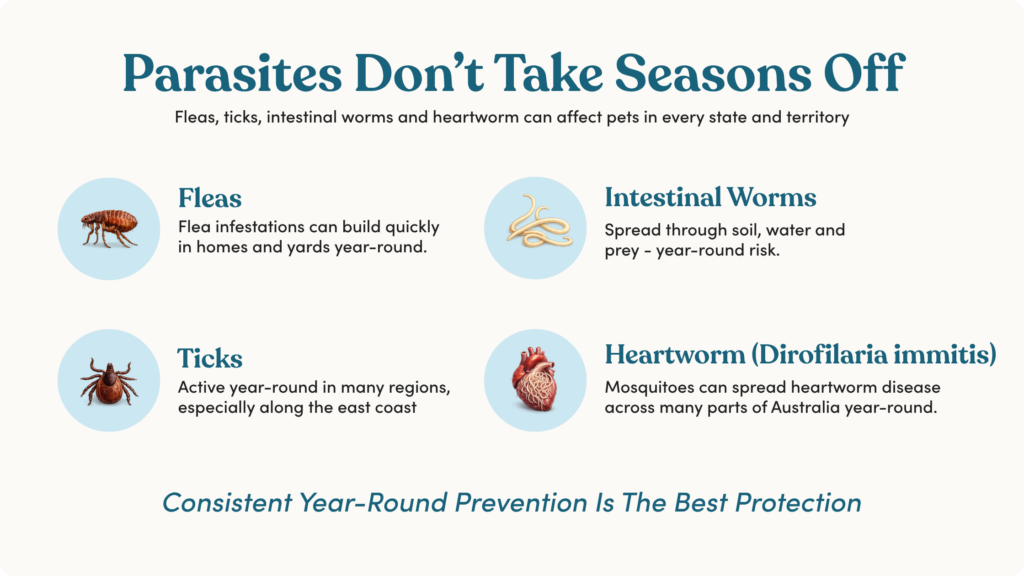
• Fleas are the most common external parasite in Australia. A single flea can lay up to 50 eggs per day, meaning an infestation can explode within weeks. Beyond the intense itching, fleas transmit tapeworms and can cause flea allergy dermatitis, a severe allergic reaction that leads to raw, infected skin. Fleas survive in carpet fibres and outdoor soil even in cooler weather, so seasonal treatment is never enough.
• Ticks, particularly the paralysis tick found along Australia’s eastern coast from North Queensland to Victoria, inject a potent neurotoxin that causes progressive paralysis and can be fatal within 24–48 hours if untreated. Brown dog ticks and bush ticks are found more broadly across the country and while less acutely dangerous, they still transmit disease and cause significant irritation.
• Intestinal worms including roundworm, hookworm, whipworm and tapeworm are endemic across Australia. Puppies and kittens are particularly vulnerable and can be born already infected! Many worms are zoonotic, meaning they can infect humans, especially children, which makes worm control a genuine public health issue, not just a pet welfare one.
• Heartworm (Dirofilaria immitis), transmitted by mosquitoes, is present across tropical and subtropical Australia and increasingly found in temperate regions. Larvae travel through the bloodstream to the heart and pulmonary arteries, where they can cause severe, potentially fatal cardiac disease. Treatment of established heartworm infection is complex, dangerous and expensive — prevention is always the right choice.
“Treat When You See It” Doesn’t Work
Many pet owners only reach for parasite treatment when they spot a flea on their pet, see their dog scooting, or notice a tick. The problem is that by the time you see these signs, the situation is already significantly worse than it appears on the surface.
With fleas, the pet carries only around 5% of the total infestation — the other 95% (eggs, larvae and pupae) are already distributed throughout your home environment. And with paralysis tick, the window between first symptoms and life-threatening collapse can be frighteningly short.
Vet Tip – Consistent monthly (or as directed) parasite prevention costs a fraction of the veterinary bills associated with treating an active infestation, allergic reaction, or tick paralysis. Year-round prevention is always the more economical — and humane — choice.

Below we’ve broken down the key products by coverage type, so you can identify which formulation best suits your pet’s lifestyle and your location in Australia.
Application type: ● Oral/Chewable ● Spot-on
All-in-One Combination Products
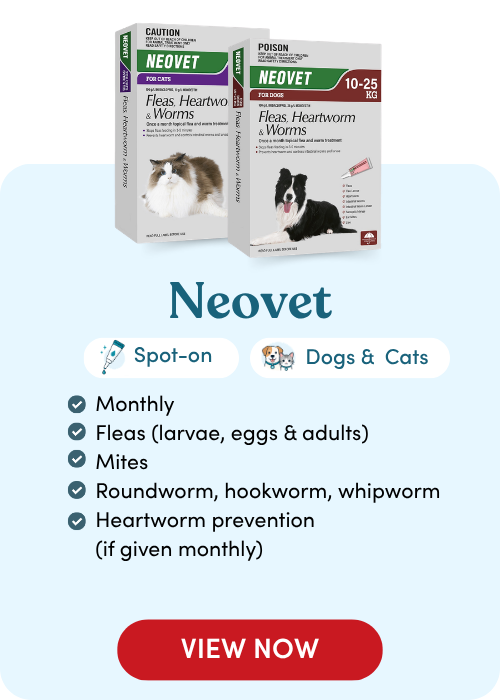
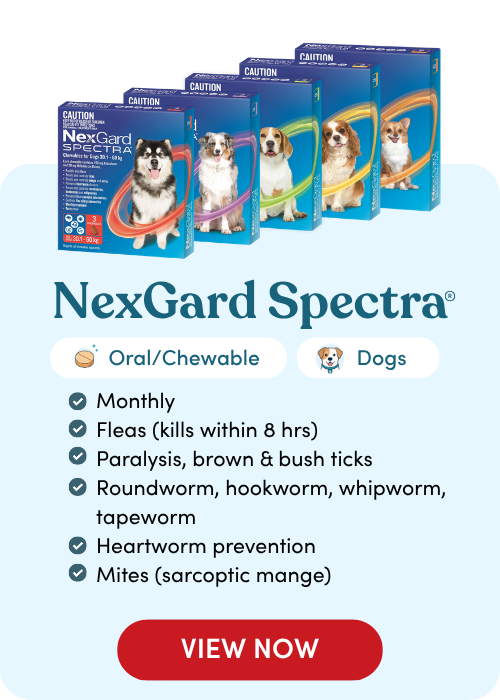
These comprehensive products protect against fleas, ticks and intestinal worms in a single monthly treatment. They’re the preferred choice for most Australian vets because they remove the risk of accidentally missing a parasite type, simplify your treatment schedule, and offer the broadest protection for pets that spend time outdoors.

Flea & Worm — No Tick Coverage
These products handle both flea control and intestinal worm prevention but do not include tick coverage. They’re a practical choice for pets in lower-risk tick areas — inland or far southern states — or when combined with a separate tick preventative if needed.
Flea & Tick — No Worm Coverage
These products target both fleas and ticks without intestinal worm coverage. They work well as part of a split treatment programme — for example, pairing a flea-and-tick chewable with a separate all-wormer tablet.
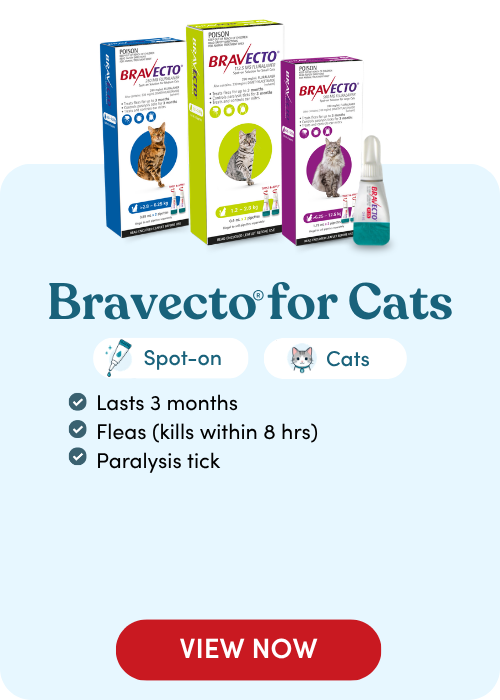
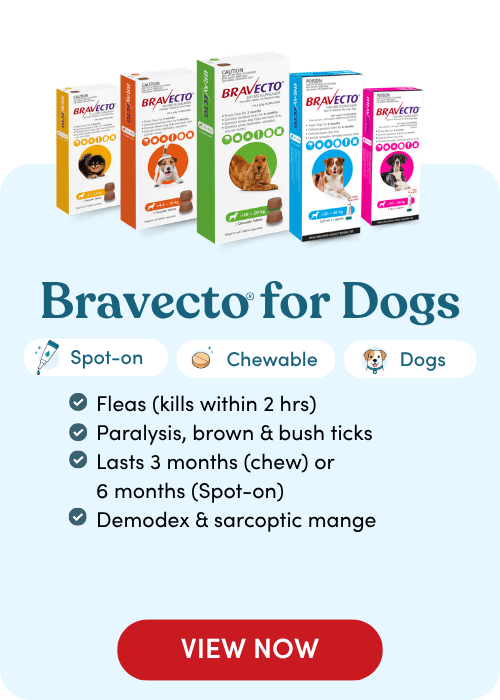


Flea Treatment Only
Dedicated flea-only products are useful for targeting an existing infestation quickly, treating multiple pets in a household at low cost, or for pets with confirmed tick and worm coverage from another product.
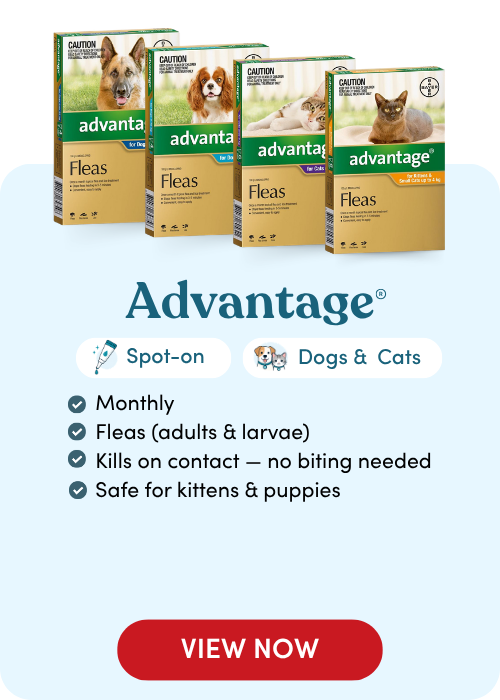
Worm Treatment Only
Standalone wormers are essential when used alongside a flea-and-tick product that has no worm coverage (such as Bravecto or NexGard Original), or for periodic all-wormer dosing. Many vets recommend all-wormer tablets every three months for adult dogs and cats.
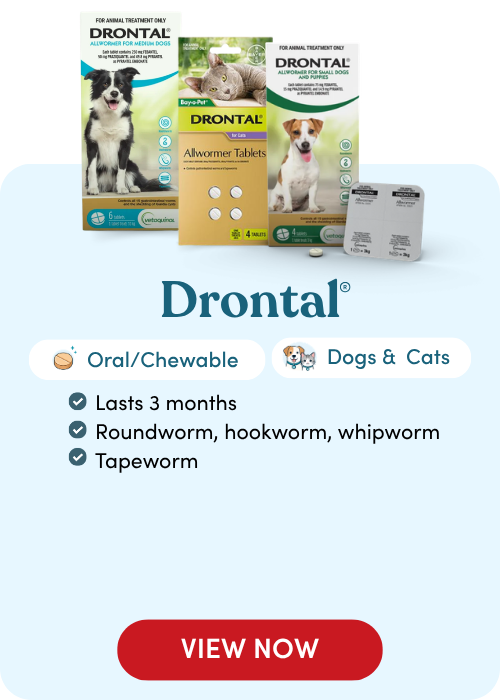


At a Glance: Coverage Comparison
Use this table to quickly see which of the most popular products cover which parasite types.
| Product | For | Fleas | Ticks | Intestinal Worms | Heartworm | Duration |
| Revolution Plus | 🐱 | ✔ | ✔ | Partial | ✔ | Monthly |
| Neovet | 🐶🐱 | ✔ | ✔ | ✔ | ✔ | Monthly |
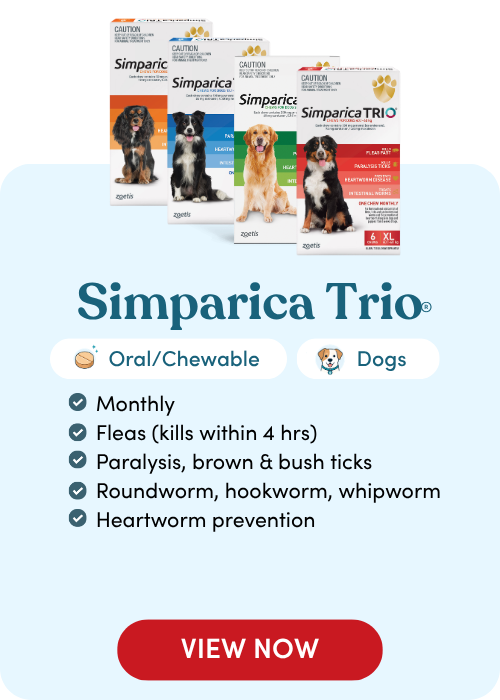
| Simparica Trio | 🐶 | ✔ | ✔ | ✔ | ✔ | Monthly |
| NexGard Spectra | 🐶 | ✔ | ✔ | ✔ | ✔ | Monthly |
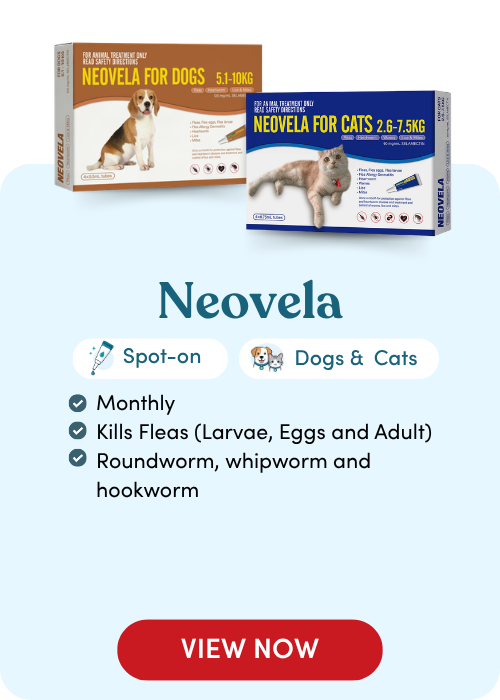
| Neovela | 🐶🐱 | ✔ | ✖ | ✔ | ✔ | Monthly |
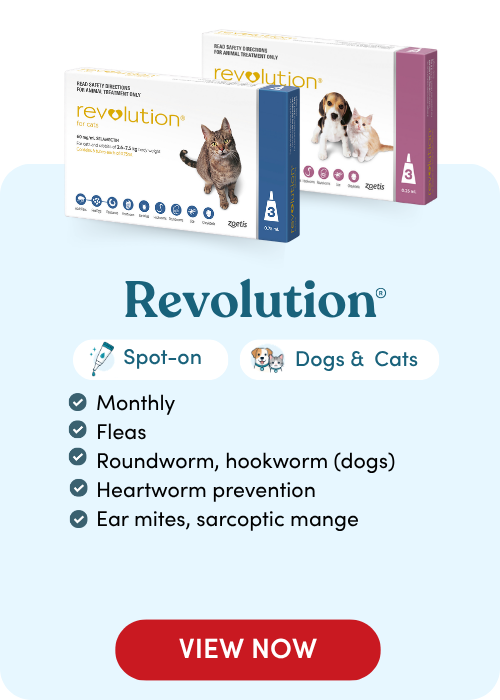
| Revolution | 🐱 | ✔ | ✖ | ✔ | ✔ | Monthly |
| Bravecto (Dogs) | 🐶🐱 | ✔ | ✔ | ✖ | ✖ | 3 Months |
| Simparica | 🐶 | ✔ | ✔ | ✖ | ✖ | Monthly |
| NexGard Original | 🐶 | ✔ | ✔ | ✖ | ✖ | Monthly |
| Advantage | 🐶 | ✔ | ✖ | ✖ | ✖ | Monthly |
| Drontal | 🐶🐱 | ✖ | ✖ | ✔ | ✖ | Every 3 months |
| Milbemax | 🐶🐱 | ✖ | ✖ | ✔ | ✔ | Monthly/3 months |
| HeartGard | 🐶 | ✖ | ✖ | ✔ | ✔ | Monthly |
Frequently Asked Questions

Do I really need year-round treatment, even in winter?
Yes. While flea and tick populations can be somewhat lower in cooler months in southern parts of Australia, they never disappear entirely. Fleas survive in heated homes year-round, and paralysis ticks remain active throughout the year in coastal areas. Intestinal worms and heartworm (via mosquitoes) have no seasonal break. Stopping treatment over winter creates a dangerous gap in your pet’s protection.
Is one product really enough, or do I need multiple?
For most pets, a single all-in-one product like NexGard Spectra or Simparica Trio (for dogs) or Revolution Plus (for cats) provides complete coverage and is all that’s needed. Some owners prefer to separate flea/tick and worm treatments — for example, using Bravecto for fleas and ticks, and Drontal every three months for worms. Either approach works; consistency is what matters most.
Are these products safe for puppies and kittens?
Most products have minimum age and weight requirements, so always check the label. As a general guide, puppies and kittens can begin most parasite prevention programs from 8–12 weeks of age. Your vet can recommend the most appropriate product for young animals.
Can I use a dog flea treatment on my cat?
Absolutely not. Certain active ingredients — most notably permethrin, found in many dog-specific spot-on treatments — are highly toxic to cats and can be fatal. Always use products specifically formulated for the species and size of your pet.
How do I know if my pet has worms if there are no symptoms?
That’s the challenge — the majority of worm infections in adult pets produce no obvious symptoms until the burden is heavy. Regular preventative treatment every 1–3 months (depending on the product) is far more reliable than waiting to see signs. Your vet can also run a faecal egg count if you want to check for current infection.
This article is for informational purposes only and does not constitute veterinary advice. Always consult your veterinarian before starting, changing or stopping any parasite prevention program for your pet.